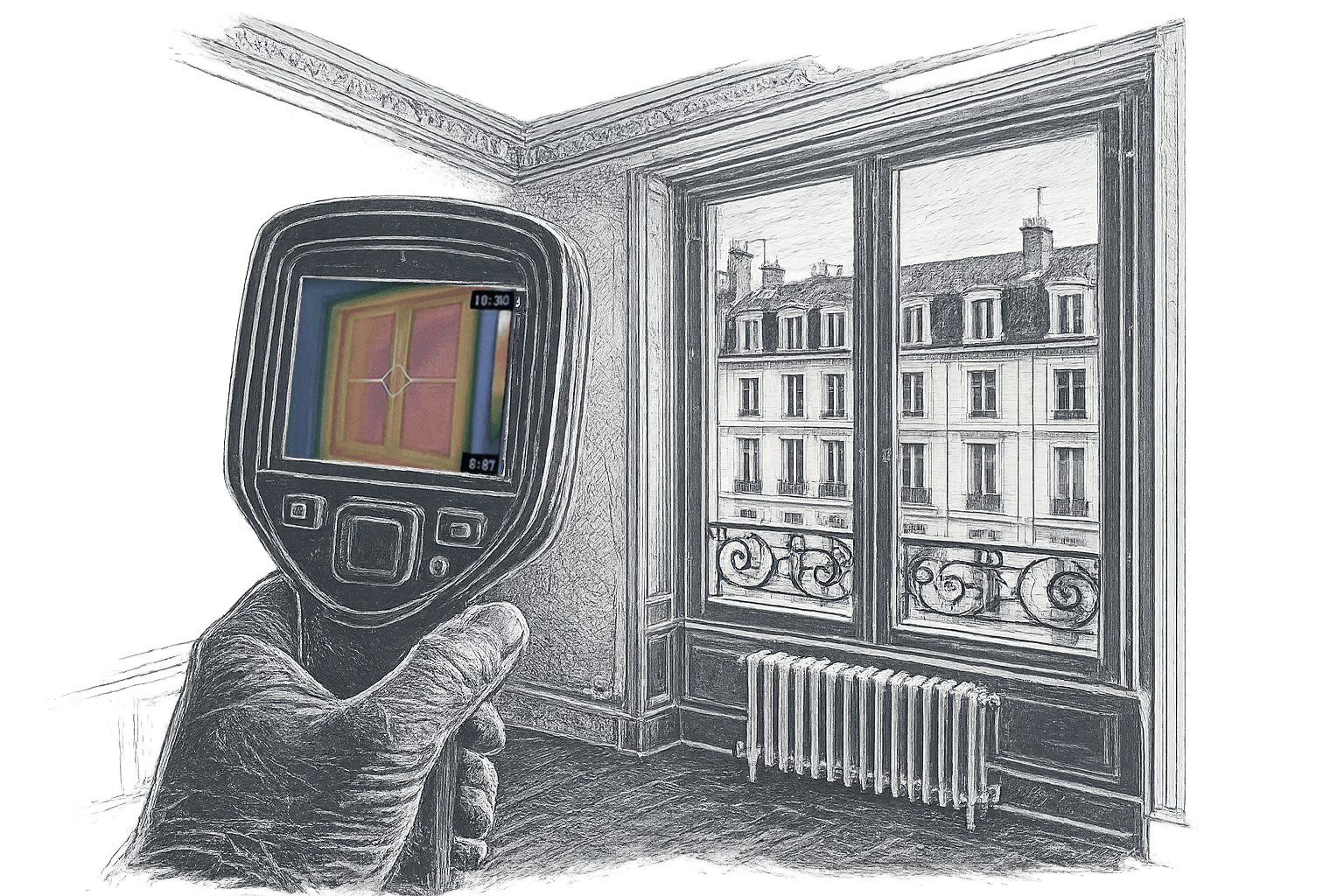
Real estate value is not always what it seems.

A property’s value is not defined by its surface alone.

At first glance, two apartments may appear identical.
Same size, same floor, same building — sometimes even the same layout.

And yet, their true value can differ significantly.

This gap is neither accidental nor solely driven by the asking price.
It comes from a deeper reading of the property — one that goes beyond the obvious.

Because in real estate, what is visible is often only part of the equation.

The illusion of apparent comparison

The instinct is natural: to compare.

Price per square meter, overall condition, floor level, exposure —
these benchmarks structure the market and provide reference points.

But they also create an illusion of rationality.

Two properties can tick the same boxes…
yet offer fundamentally different realities.

Why?

Because a property’s value does not lie solely in its characteristics,
but in how they interact — and in what they truly allow.
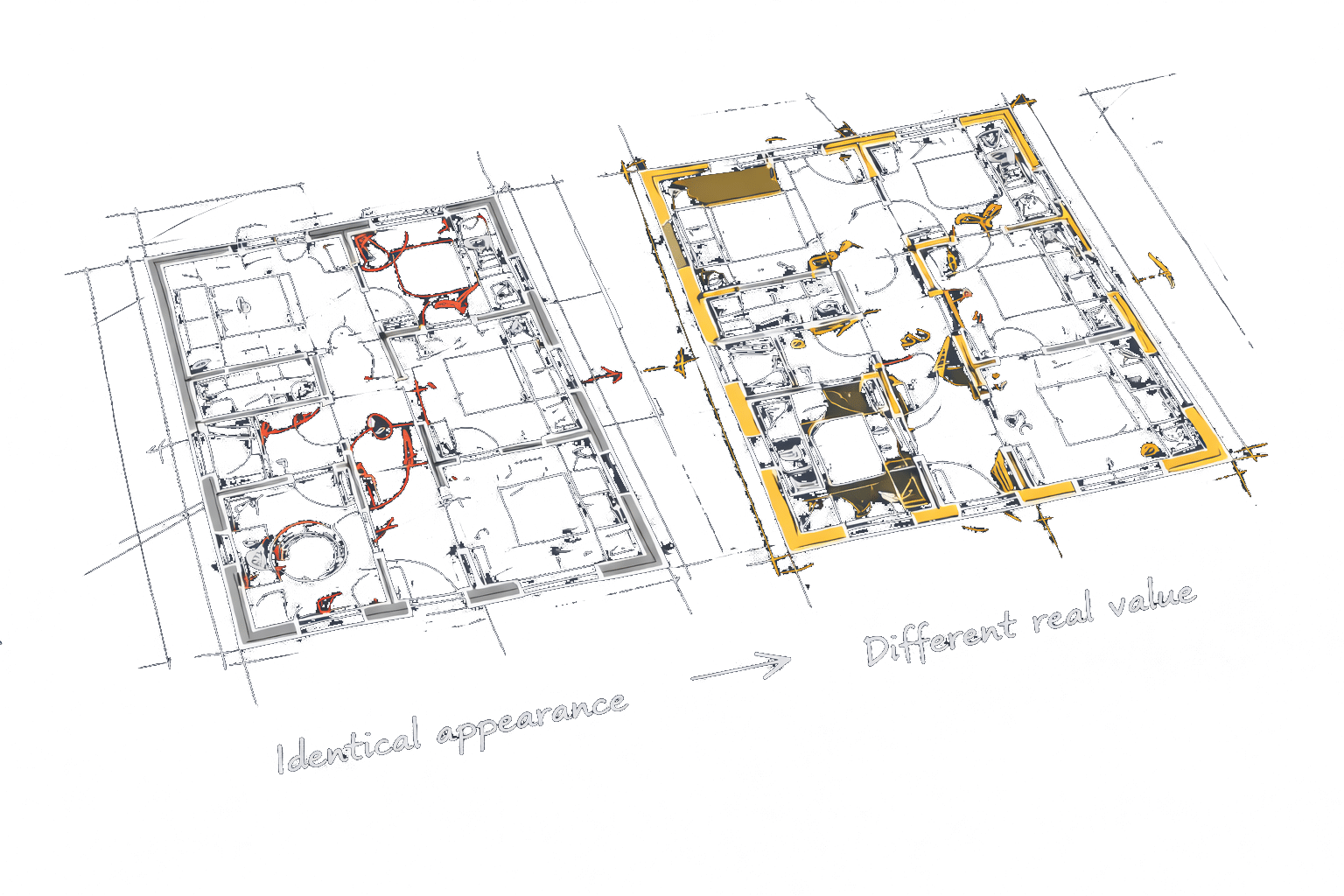
Two properties that appear identical never tell the same story

What truly defines a property’s value

Quality of layout

A floor plan is not just about surface area.

Two 60 sqm apartments can offer completely opposite experiences:
one fluid, intuitive, and pleasant to live in;
the other fragmented, constrained, difficult to adapt.

Wasted corridors, secondary rooms without natural light, poor proportions —
these invisible details in a listing directly shape the quality of use.

And ultimately, the value.

Chart-line Chart-line

Transformation potential

Some properties are “finished.”
Others are “open.”

The ability to rethink spaces, optimize volumes, and adapt a property to contemporary use
is a powerful driver of value.

But this potential is not always immediately visible.

It requires projection.

Looking beyond what exists, anticipating what could be —
and assessing the relevance of that transformation.

Eye Eye

Invisible constraints

Every property carries its own limits.

Some are obvious.
Others far less so.

  • a layout difficult to modify
  • constraints tied to the building
  • structural elements that lock certain decisions

These factors are not always visible during a visit.
They do not appear in listings.

And yet, they directly determine what the property will allow — or prevent.

Location Location

Micro-location

Same building, same street… and yet.

A slightly different exposure, a closer opposite façade,
a subtle variation in light or openness —
these nuances deeply influence the experience of a place.

They are often underestimated because difficult to quantify.

Yet they play a key role in perceived quality — and therefore in value.

Clock Clock

Perception over time

A property is not judged only at a given moment.

Its ability to remain attractive over time —
to be resold, rented, transformed — is decisive.

Two similar properties today
may evolve very differently tomorrow.

One adapts.
The other declines — not physically, but in relevance.

Flashlight Flashlight

Finikia Reading

Reading a property is not simply visiting it.

  • It means understanding its logic.
  • Identifying its true strengths.
  • Anticipating its limits.
  • Projecting its possible evolutions.

It is about moving beyond appearances to reach a more complete vision — one that allows for informed and accurate decisions.

Because two properties that seem similar at first glance
never tell the same story.

What the market doesn’t show

real estate value

The market rewards what is visible.

A recent renovation.
A well-presented kitchen.
Careful staging.

But it rarely reveals:

  • what limits the property
  • what cannot evolve
  • what will impact its value over time

This gap in valuation is not a matter of chance.

This asymmetry of information creates significant differences between perceived value and real value.

That is precisely where the difference is made.

What you don’t see is often what matters most

Projection

Let’s take two apartments that are strictly comparable on paper.

Same surface. Same price. Same location.

One allows for a simple transformation:
it gains in usability, attractiveness, and value.

The other, despite an appealing presentation, remains constrained.
Its limitations prevent any real evolution.

In the short term, the difference is barely visible.
Over time, it becomes decisive.

Conclusion

Comparison is not enough.
Reading makes the difference.

A property is not defined by what it is,
but by what it allows — or prevents — it to become.

And it is this level of understanding that turns a standard decision into a controlled one.